Driving in Khao Lak: A Practical Road Guide
Thailand drives on the left, and you must carry both your home licence and an International Driving Permit (IDP) to legally drive a rental car around Khao Lak and Phang Nga.
Compare Car Rental DealsSearch & Compare Car Rental Deals
Free cancellation on most vehicles
Rules and Documents You Must Carry
Driving in Phang Nga province is generally a relaxed experience, but motorists must understand the legal requirements. In Thailand, traffic moves on the left and overtaking is done on the right. When you arrange a car rental, you must carry the correct paperwork so that you are driving legally and your insurance coverage stays valid.
- Your original national driving licence from your home country must be carried at all times.
- An International Driving Permit (IDP, either the 1949 or 1968 version) is mandatory and must be obtained in your home country before arrival.
- Driving without an IDP can void your insurance policy and may result in police fines during routine checks.
- The minimum age to rent a car is typically 21, though drivers under 25 may face a young-driver surcharge depending on the provider.
If you are driving from Phuket Airport to Khao Lak, you will travel on well-marked roads where standard traffic rules are enforced by highway patrol officers.
Speed, Seatbelts and Checkpoints
Speed limits in Thailand are set by area type and monitored by highway patrol units. While driving the Phang Nga region, expect speed cameras and active police checkpoints along Highway 4.
| Zone / Road Type | Standard Speed Limit |
|---|---|
| Built-up municipal areas / towns | 50 - 60 km/h |
| Open rural highways (Highway 4) | Around 90 km/h |
| Two-lane rural roads | Follow posted signs |
Officers at checkpoints frequently check seatbelts, which are mandatory for all passengers. Since September 2022, child seats are legally required for children under 6 or under 135 cm in height, so book one in advance. If stopped, remain calm, present your documents politely, and ask for an official ticket if a fine is issued. For emergencies, the Thailand Tourist Police offer English-speaking support.
Road Conditions and the Monsoon
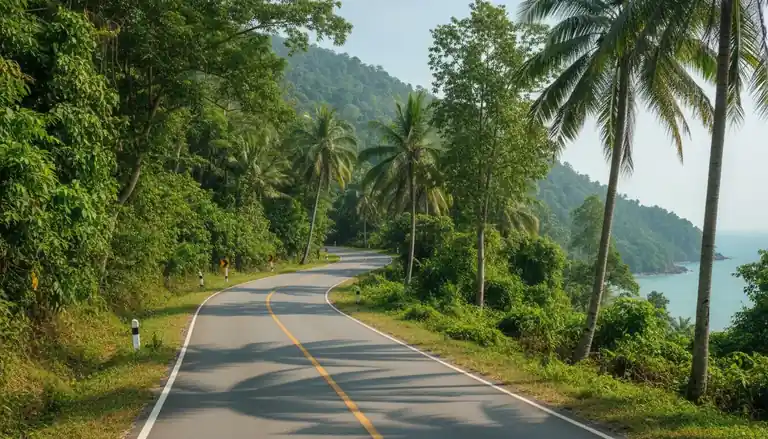
Highway 4 (Phetkasem Road) is the main multi-lane spine running directly through the Khao Lak region. It is well-developed and well-maintained, which makes reaching the many things to do in Khao Lak easy for drivers of all confidence levels.
Inland routes such as Route 401 heading east toward Khao Sok feature winding mountain passes with steep gradients. Night driving on these secondary roads brings added hazards, including unlit scooters, parked vehicles, stray animals, and a near-total lack of streetlights.
Monsoon season alert: from May to October, heavy downpours can cause sudden localised flooding and landslides on Route 401. If you must drive in heavy rain, reduce your speed well below the limit and watch for pooling water and fallen debris.
Fuel and Refuelling
Most car rental operators in Phang Nga use a strict full-to-full fuel policy, so you should return the vehicle with a full tank to avoid premium refuelling charges.
- Most passenger cars use Gasohol 95 or Gasohol 91, while SUVs and pickup trucks usually take diesel.
- A sticker inside the fuel filler flap specifies the exact fuel type your rental car requires.
- Fuel prices change weekly, so check current rates at local stations during your trip.
- Stations are plentiful along Highway 4 but become sparse on Route 401 toward Khao Sok, so fill up before the hills.
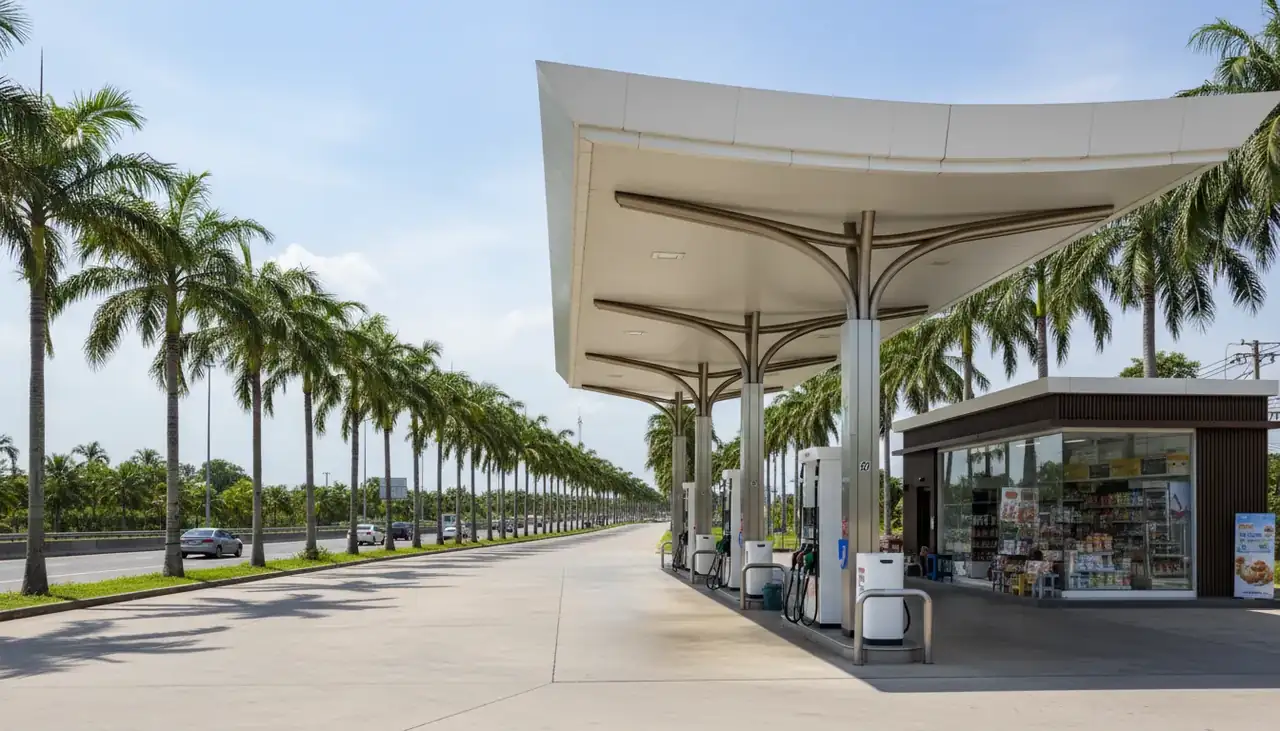
Stations such as PTT, Shell, Bangchak and Caltex are full-service: an attendant pumps the fuel for you, and you can usually pay by cash or credit card at the window. It is worth taking a moment to compare rental cars online and choose a fuel-efficient model suited to your route.
Parking Across Khao Lak
One of the biggest advantages of driving in Khao Lak compared with busier destinations like Phuket is the abundance of free, straightforward parking.
| Location | Parking Status & Details |
|---|---|
| Nang Thong Beach & Bang Niang Beach | Free roadside parking and beachside dirt lots |
| Tsunami memorial (Police Boat 813) | Free paved public car park at the entrance |
| Supermarkets (Lotus's / Makro) | Large, free, open-air parking lots for shoppers |
| Memories Beach | Reached via a rough 3 km dirt road; free but muddy in rain |
While visiting the various Khao Lak beaches, you will rarely have to pay for parking. If you join a multi-day liveaboard trip to the Similan Islands, it is best to leave your vehicle parked securely at your hotel rather than at the public Tap Lamu Pier.
If Something Goes Wrong
Incidents are rare for defensive drivers, but knowing the correct emergency procedure keeps you safe and protects you financially.
- Do not leave the scene of an accident under any circumstances; turn on your hazard lights.
- Photograph the vehicles, road positions, and any property damage from several angles.
- Call your car rental provider to report the incident and start the insurance claim.
- For medical emergencies call 1669, for general police dial 191, and for English-language help the Tourist Police are on 1155.
- Wait for the insurance company's field surveyor to arrive and document the scene.
- Do not admit fault or sign documents in a language you cannot read without a representative.
Your rental should include compulsory Por Ror Bor insurance, which covers third-party bodily injury only. For peace of mind, confirm your package includes comprehensive Class 1 / CDW cover, and check the Tourism Authority of Thailand for current travel-safety advice.
Frequently Asked Questions
What side of the road do they drive on in Khao Lak? ▾
Can I drive in Khao Lak using only my national driving licence? ▾
Is it safe to drive around Khao Lak at night? ▾
What is the legal blood-alcohol limit for drivers? ▾
Do I need to pay for parking at Khao Lak beaches? ▾
Where can I get an International Driving Permit in Thailand? ▾
Ready to compare car rental deals in Khao Lak?
Check live prices and availability from local and international suppliers.
Compare car rental deals